
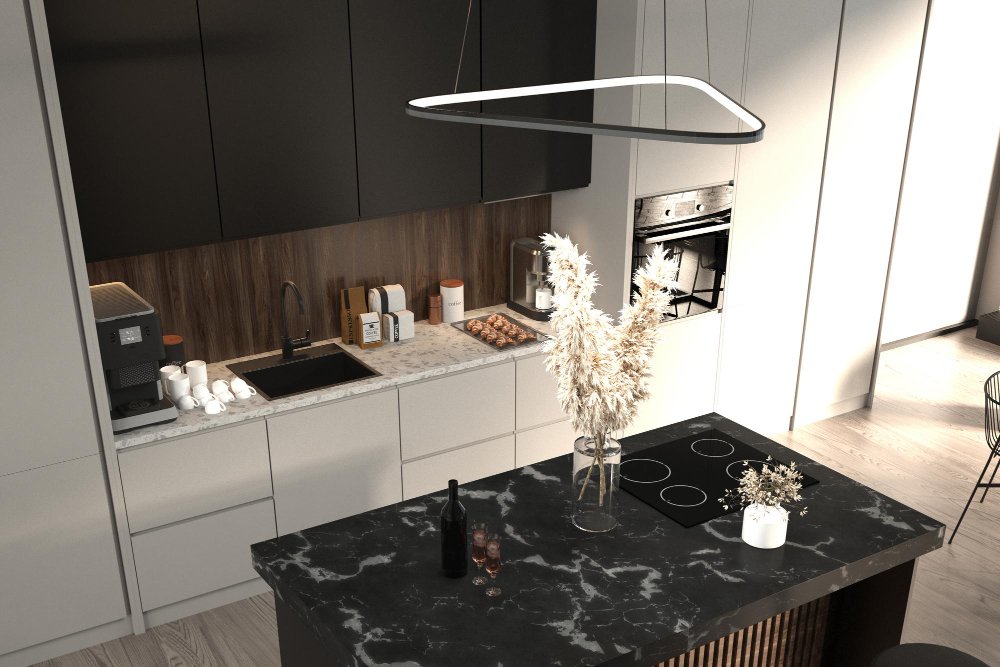
Step 1: Decide Whether Black Granite Fits Your Kitchen
Before visiting a showroom, take a close look at your kitchen. While black granite is incredibly versatile, the surrounding elements—such as cabinetry, flooring, lighting, and room size—play an important role in determining whether it’s the best choice for your space. Start by evaluating these factors:- Assess the amount of natural and artificial light in the room.
- Consider whether your cabinets will create enough contrast.
- Think about the overall style you want to achieve.
Tip
Always view the entire granite slab before placing an order. Small samples rarely show the full movement, mineral patterns, or natural variations that will appear across your finished countertop.
Remember that granite is a natural material. No two slabs are identical, which is one of the reasons homeowners appreciate its distinctive character.
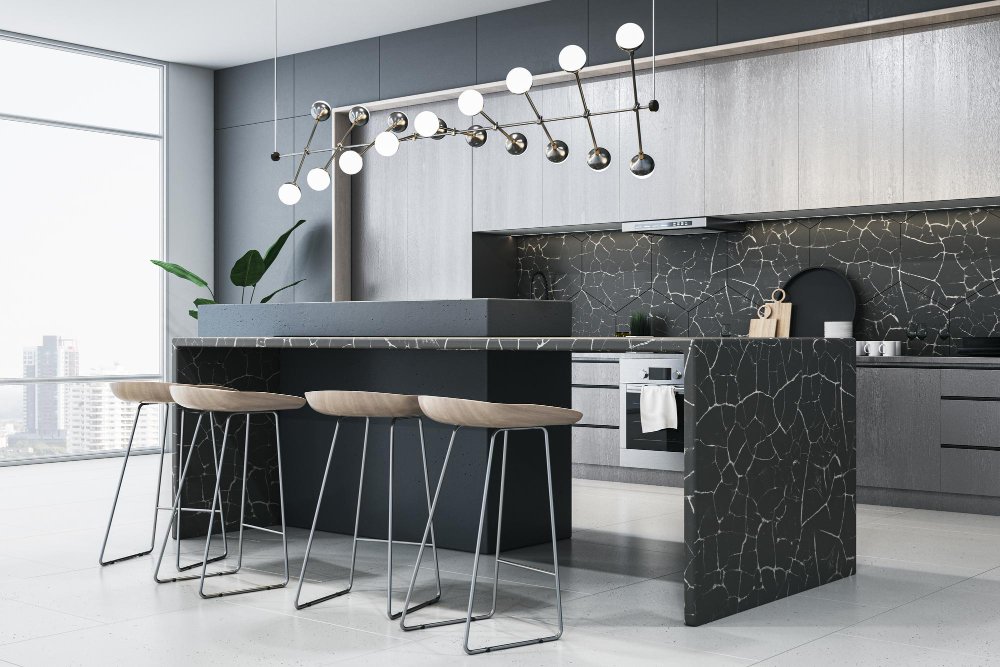
Step 2: Compare Slabs, Finishes, and Edge Profiles
Once you’ve decided that black granite is the right material, it’s time to compare the available options. This step often has the biggest influence on the finished appearance of your kitchen. Begin by comparing full slabs rather than relying on small display samples. Large slabs reveal the overall pattern, veining, and color consistency much more accurately, helping you avoid unexpected surprises after installation. Next, choose the finish that best matches your lifestyle and design preferences. The three most common finishes include:- Polished — glossy, reflective, and ideal for creating a luxurious appearance.
- Honed — smooth with a matte finish that delivers a softer, understated look.
- Leathered — lightly textured with a rich, natural character that helps disguise fingerprints and water spots.
- Straight edge for clean contemporary kitchens.
- Beveled edge for understated elegance.
- Bullnose edge with softened corners.
- Ogee edge for more traditional designs.
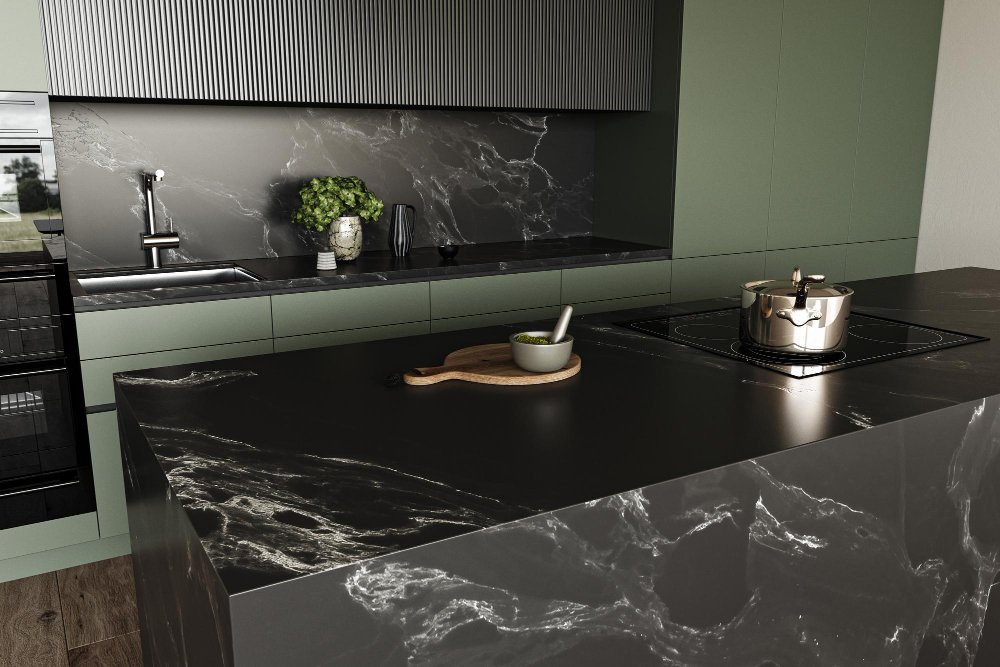
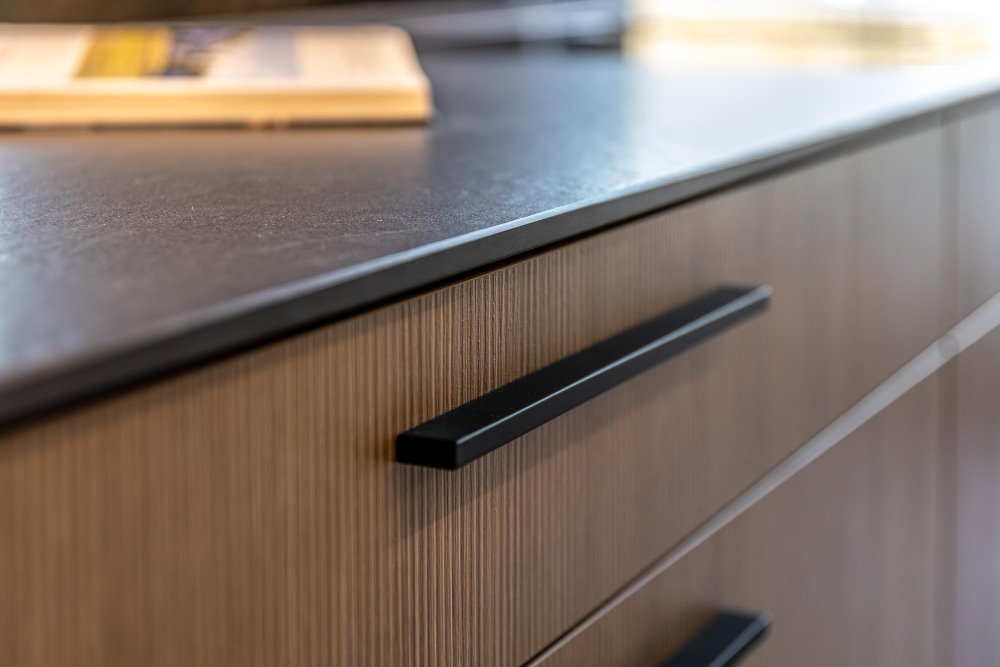
Step 3: Prepare for Installation and Long-Term Care
Choosing the perfect slab is only part of the process. Proper installation and routine maintenance are equally important if you want your black granite countertops to remain beautiful for decades. Start by confirming that your cabinets are ready to support the weight of natural stone. Granite is significantly heavier than laminate or many engineered materials, so cabinet construction and countertop spans should always be evaluated before installation begins. Next, talk with your installer about sealing requirements. While many varieties of black granite are naturally dense, sealing is still recommended for numerous stones to help reduce staining and simplify routine cleaning. Once your countertops are installed, following a few simple maintenance habits can preserve their appearance:- Clean spills promptly using a soft cloth.
- Use cleaners specifically designed for natural stone.
- Place hot cookware on trivets instead of directly on the surface.
- Always use a cutting board to protect both your knives and the countertop finish.
- Reapply sealer when recommended by the manufacturer or installer.
Read More in Home Goods Central Blog
- A Story of Style, Stress, and the Granite Countertops That Fixed It All
 Every home design project has that one decision that shifts everything into place. For this kitchen remodel, it was granite countertops. Told in the elegant, narrative style of Candice Olson, this story captures the real-life stress of renovation—and the unexpected calm and cohesion that one perfect design choice delivered. If you’re remodeling, this is the inspiration you didn’t know you needed.
 - Cabinet Refacing: The Smart Kitchen Upgrade You’re Overlooking
 Think a kitchen makeover has to start with tearing out your cabinets? Think again. In this engaging, expert-backed guide inspired by Drew Scott, discover how cabinet refacing offers a faster, more affordable way to transform your space. From design flexibility to serious savings, see why refacing may be the smartest kitchen upgrade you haven’t considered—until now.
 - Modern or Classic? Finding Your Perfect Walk-In Shower Remodel Style
 When cracked siding made their dream home feel like a project, one Sacramento couple chose fiber cement. See how wide-panel installation brought modern durability and slashed energy costs – proving exteriors matter beyond looks
Installation Checklist
- ✓ Inspect the entire slab before fabrication.
- ✓ Compare the slab with your cabinet and flooring samples.
- ✓ Confirm the selected edge profile and finish.
- ✓ Verify whether sealing is recommended.
- ✓ Ensure cabinets are capable of supporting the stone.
- ✓ Review sink and appliance cutout locations before fabrication begins.
Warning
⚠ Never assume every cabinet system is ready to support a heavy granite slab. If the cabinets aren’t properly installed or reinforced where necessary, the added weight can lead to alignment issues or unnecessary stress on the cabinetry over time.
Selecting black granite countertops is about much more than choosing a beautiful color. By evaluating your kitchen layout, comparing full slabs, selecting the right finish and edge profile, and preparing properly for installation, you’ll make decisions that improve both the appearance and functionality of your space.
Natural granite remains one of the most durable and timeless countertop materials available. With thoughtful planning and routine care, it can withstand years of everyday cooking, entertaining, and family life while maintaining its distinctive character.